The days of the week in Spanish are: lunes, martes, miércoles, jueves, viernes, sábado, and domingo. Learning these days is essential for basic Spanish communication.
{fullWidth}
Mastering the days of the week in Spanish opens doors to scheduling, making appointments, and planning activities in Spanish-speaking countries. It's a fundamental step in understanding the language’s rhythm and structure. Having a firm grasp of these terms enables language learners to engage in everyday conversations with confidence.
{getToc} $title={Table of Contents} $count={true} $expanded={false}
Whether you're a traveler, a student, or just keen on expanding your linguistic skills, knowing how to say Monday to Sunday in Spanish is indispensable. As simple as it seems, this knowledge lays the groundwork for more complex date-related dialogues and is a cornerstone in the journey to fluency. Remember, embracing a new language starts with the basics, and what could be more basic than the days of the week?
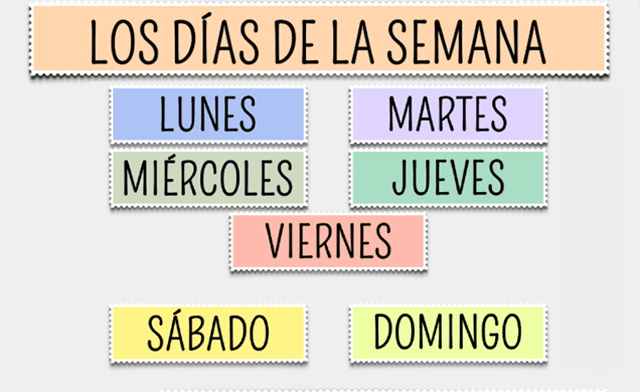 |
Credit: vamospanish.com |
Overview Of Spanish Linguistic Fundamentals
Understanding the basics of the Spanish language is crucial for efficient learning. Start with days of the week, common phrases, and simple grammar constructs. Spanish pronunciation relies on phonetic consistency, meaning words are often spoken as they're written, making it an accessible starting point for language learners.
- Lunes (Monday)
- Martes (Tuesday)
- Miércoles (Wednesday)
- Jueves (Thursday)
- Viernes (Friday)
- Sábado (Saturday)
- Domingo (Sunday)
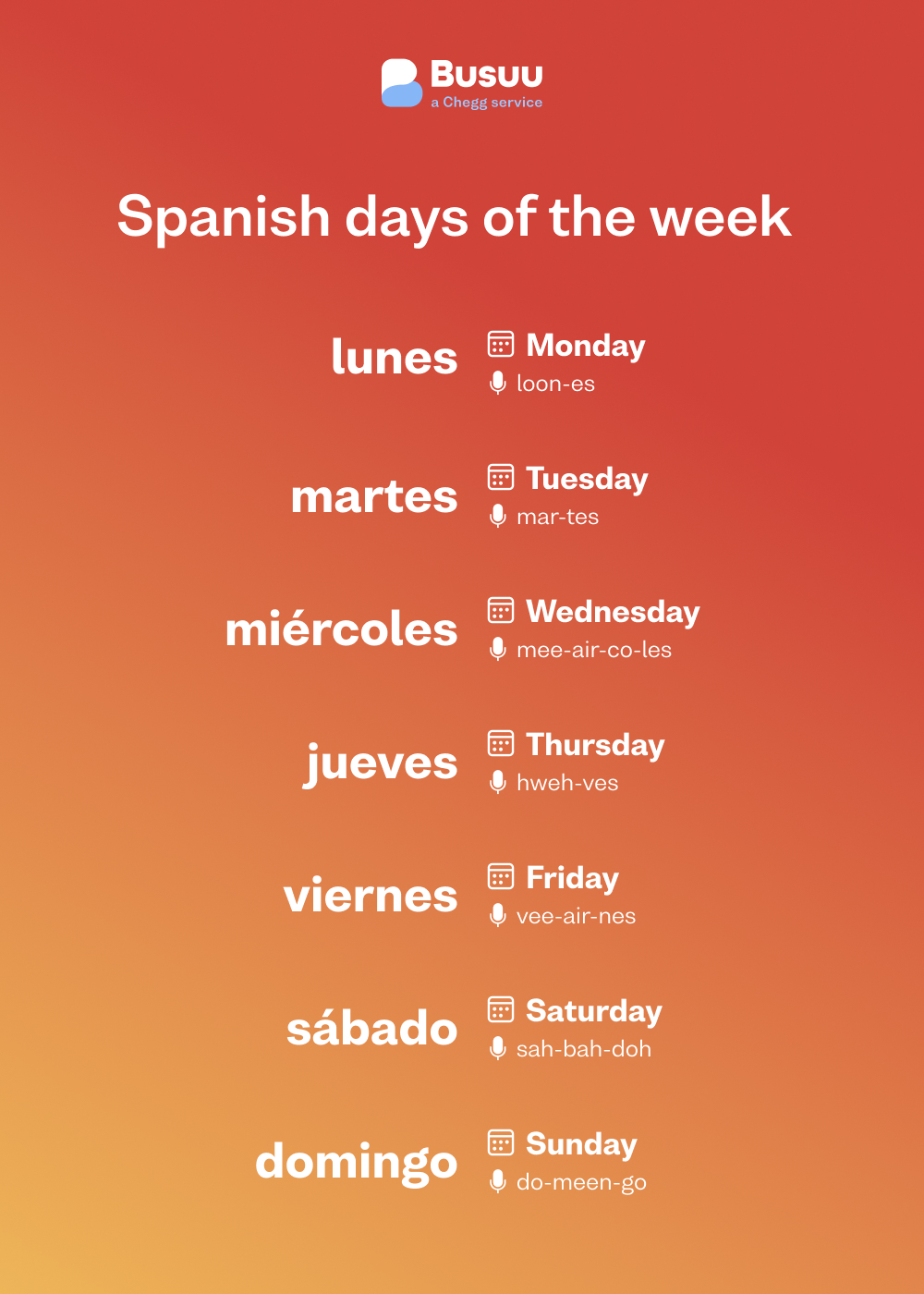 |
Credit: www.busuu.com |
Days Of The Week In Spanish: The Basics
Mastering the days of the week in Spanish is a basic yet vital part of learning the language. Whether it’s for making plans or setting up appointments, understanding these words enhances communication. Let’s explore the names, pronunciations, and cultural nuances embedded in the Spanish weekdays. With this knowledge, learners can engage more confidently in everyday Spanish conversations.
List Of Days In Spanish With Pronunciation
Here’s a handy list of the days in Spanish, along with a guide to pronounce them correctly. Each day is significant in its own right, setting the stage for various activities and planning throughout the week.
| English | Spanish | Pronunciation |
|---|---|---|
| Monday | Lunes | Loo-nehs |
| Tuesday | Martes | Mahr-tehs |
| Wednesday | Miércoles | Mee-ehr-koh-lehs |
| Thursday | Jueves | Hweh-behs |
| Friday | Viernes | Vee-ehr-nehs |
| Saturday | Sábado | Sah-bah-doh |
| Sunday | Domingo | Doh-meen-goh |
Origins Of The Names Of The Days
The Spanish days of the week have roots in astrology and ancient mythology. They are linked to celestial bodies and gods of Roman culture. This connection is a bridge to history and how days were named and ordered in various traditions. It’s fascinating to peel these linguistic layers and understand the deeper meanings.
- Lunes – from "Luna" or the Moon.
- Martes – for Mars, the god of war.
- Miércoles – named after Mercury, the messenger god.
- Jueves – for Jupiter, the king of gods.
- Viernes – associated with Venus, the goddess of love.
- Sábado – from the Hebrew "Shabbat", the day of rest.
- Domingo – relates to "Dominus", meaning the Lord.
Grammatical Usage: Capitalization And Plurality Rules
Spanish grammar has specific rules for writing the days of the week. Knowing these rules helps in crafting error-free texts, be it in formal or informal settings. Grasping such nuances can significantly enhance one’s written and spoken Spanish.
Capitalization: Unlike English, Spanish does not capitalize days of the week unless they start a sentence.
Plurality: When talking about days in a plural sense, simply add an "s" like "lunes" to "luneses". It denotes repeating events or routines.
- Example for Capitalization: "el martes" not "El Martes".
- Example for Plurality: "Los viernes voy al cine" — on Fridays, I go to the movies.
Practical Uses Of Days In The Spanish Language
Understanding the days of the week in Spanish opens doors to flawless daily communication. From making plans to discussing habits, the days are basic yet potent tools in mastering the language. They also anchor us in time, helping to pinpoint historical events. Let's explore how these days enrich conversations and connections within the Spanish-speaking world.
Making Appointments And Plans
Whether setting up a meeting or planning a gathering, knowing the days of the week is crucial. They are the backbone of coordination and scheduling. For instance:
- "Nos vemos el lunes" – Let's meet on Monday.
- "La fiesta será el sábado" – The party will be on Saturday.
Clear communication about date and time prevents mix-ups and ensures everyone is on the same page.
Discussing Habits And Routines
Routines shape our lives, and days of the week are key in describing them. Phrases like "Voy al gimnasio los martes y jueves" (I go to the gym on Tuesdays and Thursdays) give structure to our weekly conversations. Here's a typical weekly schedule as an example:
| Lunes | Martes | Miércoles | Jueves | Viernes |
|---|---|---|---|---|
| Trabajo | Yoga | Trabajo | Gimnasio | Pizza con amigos |
Describing Events And Historical Dates
The days of the week help us remember significant moments. History is full of dates tied to days. For instance, "El cinco de mayo cae en viernes este año" (May 5th falls on a Friday this year) connects the occasion with a specific day. Below are events often recollected by their dates:
- Independencia de México – 16 de septiembre
- Descubrimiento de América – 12 de octubre
- Navidad – 25 de diciembre
Knowing the days of the week helps celebrate holidays on the right day every year.
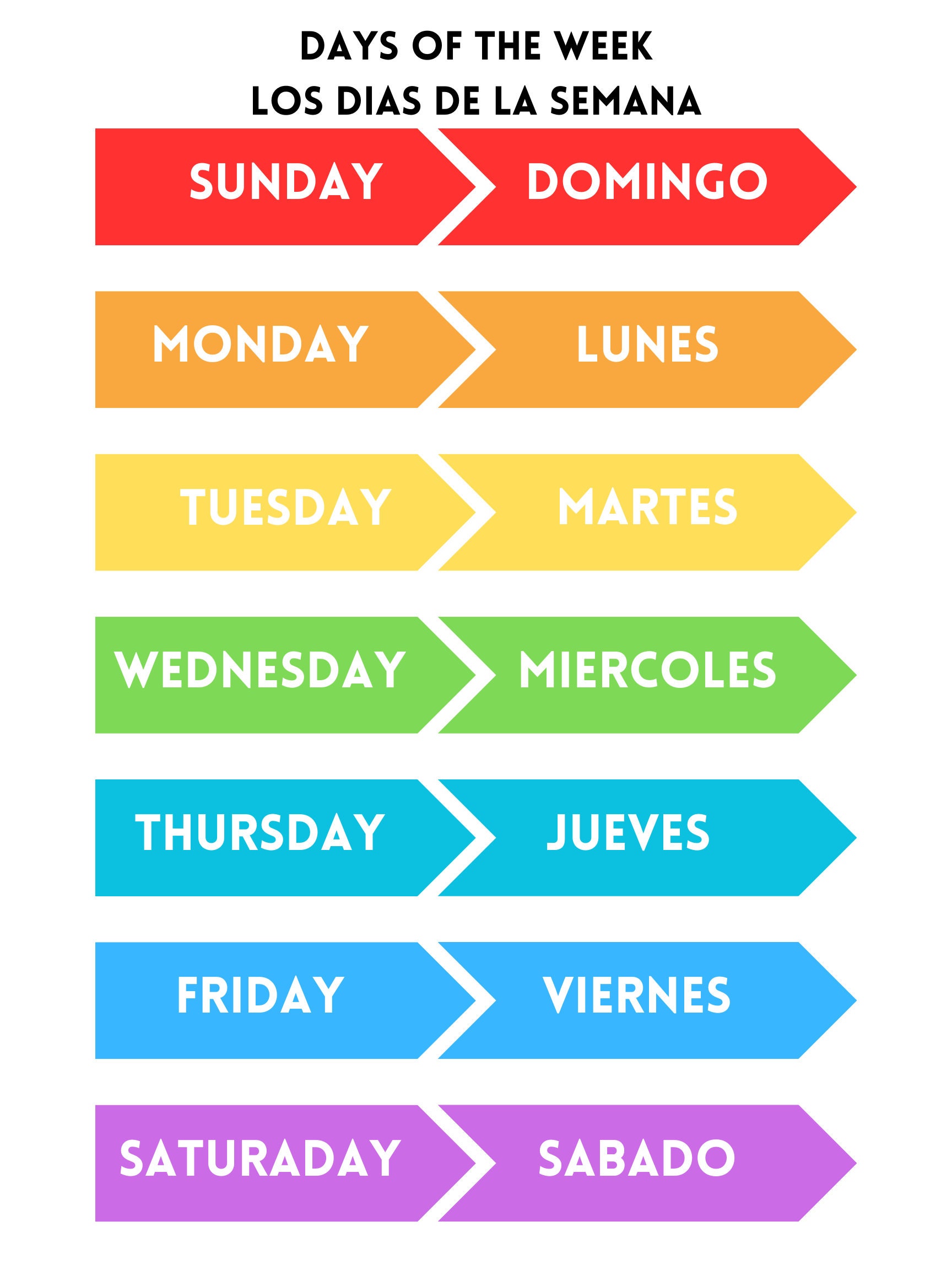 |
| Credit: www.etsy.com |
Cultural Insights: How Days Of The Week Influence Hispanic Life
In Hispanic cultures, days of the week carry deep significance. Beyond mere markers of time, these days embody social, religious, and traditional practices that influence daily life. From weekly celebrations to age-old superstitions, every day plays a unique role. Dive into how these days shape Hispanic societies.
The Role Of Weekdays In Spanish-speaking Societies
Weekdays in Hispanic life go beyond work and rest. They're a framework for communal activities and habits. Monday, or 'lunes', can start with a slower pace, as it follows the festive weekend. Contrastingly, Wednesday, 'miércoles', is often seen as the week's heart and a boost for productivity. Weekends, particularly Sundays, are typically reserved for family gatherings and church.
Festivals, Holidays, And Traditions Associated With Specific Days
- Saturdays (sábados) — Popular for weddings and family parties.
- Sundays (domingos) — Reserved for church and rest in many areas.
Some days carry special meaning. For instance, Día de Muertos falls on November 1st and 2nd. This is a time to honor the deceased.
Superstitions And Sayings Related To Days In Spanish Culture
In Spanish culture, superstitions are woven into the fabric of daily life. Tuesdays, 'martes', are often considered unlucky, especially the 13th.
Common sayings like "En martes, ni te cases ni te embarques" advise against marrying or embarking on trips on Tuesdays.
Learning Tips And Resources
Grasping the Spanish days of the week is a solid start for anyone learning the language. Let's dive into fun and effective ways to remember them. Use these tips and resources to enhance your learning experience:
Effective Methods For Memorizing The Days Of The Week
Association is key. Link each day with activities you commonly do. For example, "Lunes" might be laundry day, so picture washing clothes. Through visual cues, retention improves. Here are more memorization strategies:
- Create mnemonics using the first letter of each day.
- Flashcards work wonders for visual learners.
- Practice by writing them out in order and using them in sentences.
Interactive Language Learning Tools And Apps
Technology can make learning feel like a game. Explore apps with flashcards, quizzes, and speech recognition to reinforce your skills. Here are some popular ones:
| App Name | Features |
|---|---|
| Duolingo | Interactive lessons, progress tracking |
| Babbel | Conversational practice, speech analysis |
| MindSnacks | Games, vocabulary building |
Cultural Immersion And Practice Through Media And Travel
Immerse yourself in Spanish by watching films and shows. Begin with children's programming for clear and basic language. Listen to Spanish music to get the rhythm of the language. Consider these options:
- Watch movies such as "Coco" or "El Libro de Vida".
- Tune into Spanish YouTube channels for kids.
- Listen to songs and try to identify the days of the week.
Traveling to Spanish-speaking countries offers authentic practice. Engage in conversations with locals. Use the days in your dialogue and they'll stick with you for life.
Frequently Asked Questions Of Days Of The Week In Spanish
What Are The Spanish Names For Weekdays?
In Spanish, the weekdays are Lunes (Monday), Martes (Tuesday), Miércoles (Wednesday), Jueves (Thursday), Viernes (Friday), Sábado (Saturday), and Domingo (Sunday).
How Do You Pronounce Days In Spanish?
Days in Spanish are pronounced as follows: Lunes (loo-nes), Martes (mar-tes), Miércoles (mee-air-coh-les), Jueves (whay-ves), Viernes (vee-air-nes), Sábado (sah-bah-do), and Domingo (do-meen-go).
Are Spanish Weekdays Capitalized?
No, in Spanish, days of the week are not capitalized unless they start a sentence. For example, you would write "lunes" instead of "Lunes," unless it's at the beginning of a sentence.
Why Is Spanish Useful For Learning Days?
Spanish is a commonly spoken language globally, making it useful for travel and cultural exchange. Learning the days can help you understand schedules, make plans, and integrate into daily Spanish-speaking life.
Conclusion
Mastering the days of the week in Spanish is the first step towards fluency. These essential terms open doors to scheduling, socializing, and understanding local culture. Embrace the challenge, practice daily, and soon you'll converse like a native. ¡Hasta la próxima, amigos!